Avion
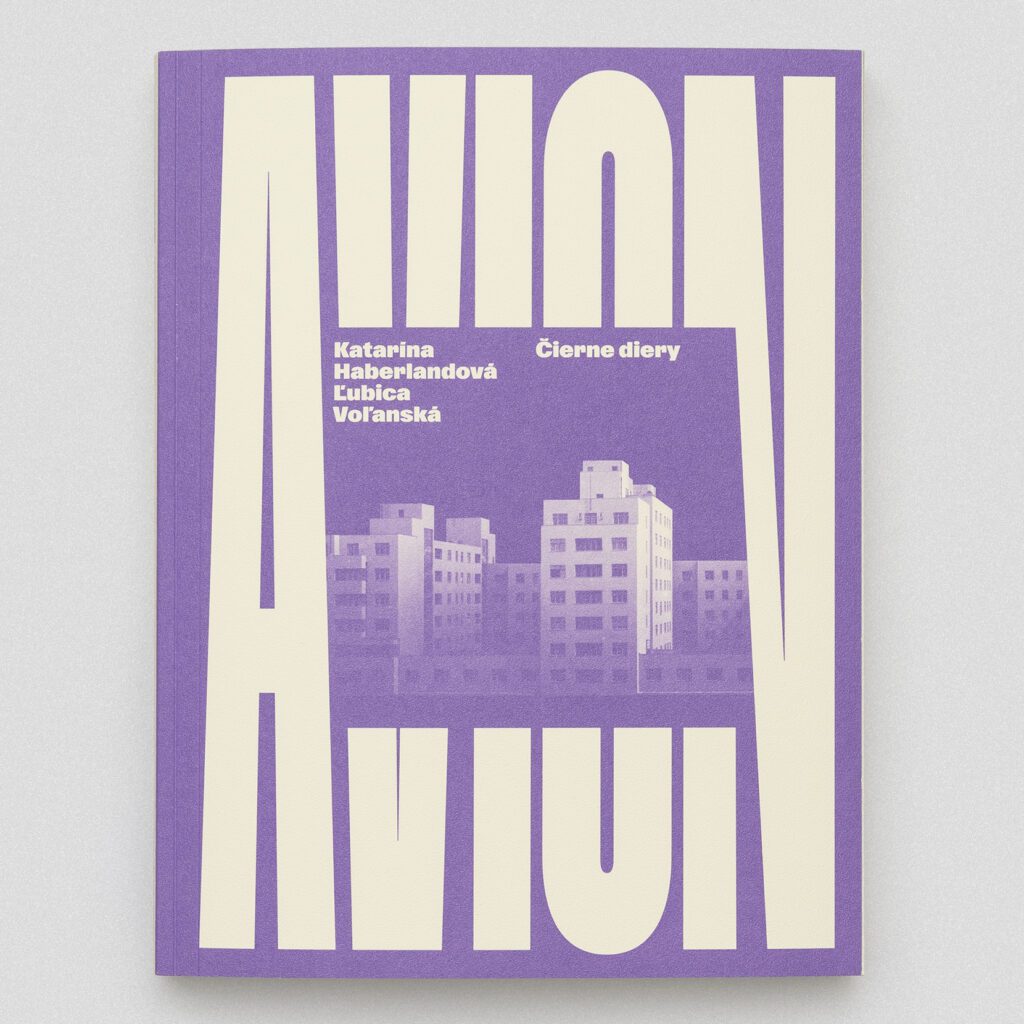
- Haberlandová, K., Voľanská, Ľ. (2025). Avion. Bratislava : Čierne diery, V spolupráci s Ústavom etnológie a sociálnej antropológie Slovenskej akadémie vied, v. v. i., V spolupráci s Ústavom etnológie a sociálnej antropológie Slovenskej akadémie vied, v. v. i.. ISBN 978-80-69103-05-4.
The book Avion is a revised and expanded edition of the 2021 publication in which authors Katarína Haberlandová and Ľubica Voľanská combine the perspectives of a historian of architecture and an ethnologist.
They develop the story of the functionalist apartment building Avion in Bratislava as a triple connection between the life story and work of architect Josef Marek (1889–1966), the building itself, and its residents, whose lives reflect the city’s and society’s transformations in the 20th century. Based on archival and ethnographic research, interviews, period press, and photographic documentation, the work becomes a unique testimony to the memory of place, architecture, and a sense of belonging that is passed down from generation to generation. The publication was created in collaboration with the civic association Čierne diery. The authors used two approaches – one historical-architectural, in combination with art history, and the other ethnological and anthropological, based on oral history or biographical narratives. They involved Avion residents in creating a text about the house in which they live or have lived. It is precisely this interdisciplinarity that has helped create a book that remains relatively unique in Slovakia, deepening scientific knowledge in the fields of 20th-century architectural history and social anthropology. At the same time, the book offers a captivating story to the broader public, who would not usually reach for specialist literature in these areas. The way the text is written allows readers without in-depth knowledge of the building to reflect on the story of the building and its inhabitants. Many of the aspects analysed through the testimonies of Avion’s residents are universal and have occurred in various forms not only in other apartment buildings in Bratislava, but also in other cities in Slovakia. The publication also opens up new avenues for further research into everyday life connected with the Avion apartment building, particularly in the areas of memory and forgetting policies, the history of cooperative housing, the preservation of modern architectural heritage, and community forms of housing care today. The interconnection of the good, but also less idyllic, stories and memories of Avion residents will continue to play an essential role in this.
Keywords:
20th-century history and architecture, modern architecture, interwar-period Bratislava, home, housing, ethnographic research, oral history, cultural heritage